


Keeping our homes comfortable all year round often means relying on heating and cooling systems. But these systems can use a lot of energy, making our utility bills higher than they need to be. We’ve been looking into ways to make these systems work better and use less power. It turns out there are quite a few simple things we can do around the house, and with our equipment, to make a real difference. Let’s explore how we can get more out of our heating and air without wasting energy.
Key Takeaways
- Make sure your house is sealed up tight. Check windows, doors, and any openings in the attic or basement for drafts.
- Keep your heating and cooling equipment running well. Change filters often and get it checked by a pro yearly.
- When it’s time to replace your system, look for **energy efficient HVAC systems**. Check ratings like SEER and HSPF.
- Use your thermostat wisely. Setting it correctly, especially when you’re away or asleep, saves a lot.
- Fixing air leaks in your ducts and making sure vents aren’t blocked helps air move better.
Optimize Your Home’s Insulation and Sealing
We often focus on our heating and cooling systems themselves, but sometimes the biggest energy wasters are right under our noses, or rather, in our walls and ceilings. Making sure your home is well-insulated and properly sealed is a foundational step to keeping your conditioned air inside where it belongs. Think of it like wearing a good coat on a cold day; it keeps the warmth in. Without it, your HVAC system has to work much harder, burning through more energy and costing you more money.
Seal Air Leaks Around Windows and Doors
Drafts around windows and doors are common culprits for energy loss. We’ve all felt that chill when standing near a closed window in winter. These leaks let the heated or cooled air escape and allow outside air to seep in. It’s a constant battle for your HVAC system.
- Check for drafts: On a windy day, you can sometimes feel the air moving. A more reliable method is to use an incense stick or a thin piece of tissue paper near the edges of windows and doors. If the smoke or paper moves, you’ve found a leak.
- Caulking: For small gaps and cracks, especially around window frames and door trim, caulk is your best friend. It’s a flexible sealant that dries hard.
- Weatherstripping: For moving parts like the edges of doors and operable windows, weatherstripping is ideal. It creates a flexible seal when the window or door is closed.
- Door sweeps: Don’t forget the bottom of your exterior doors. A simple door sweep can block a surprising amount of air infiltration.
Improve Attic and Wall Insulation
Attics are notorious for heat loss in the winter and heat gain in the summer. Heat rises, so if your attic isn’t properly insulated, a lot of that warm air from your living space will escape upwards. Similarly, poorly insulated walls can let a lot of temperature transfer happen.
- Attic Insulation: The recommended R-value (a measure of thermal resistance) for attics varies by climate zone, but generally, more is better. You can often add blown-in insulation over existing insulation to boost its effectiveness. Check the depth of your current insulation; if it’s less than 10-12 inches, you likely have room for improvement.
- Wall Insulation: Insulating existing walls can be more involved, often requiring blowing insulation into wall cavities. This is a job that might require professional help, but the payoff in comfort and energy savings can be significant.
Check for Drafts in the Basement and Crawl Spaces
Basements and crawl spaces are often overlooked, but they can be major sources of air leakage. Cold air can enter through foundation cracks or gaps where pipes and wires enter the house, and then rise into your living areas. Sealing these areas can make a big difference, especially for homes with heating vents or radiators located in the basement.
- Foundation Cracks: Inspect the foundation walls for any visible cracks and seal them with appropriate masonry caulk or hydraulic cement.
- Rim Joists: The area where the foundation meets the house framing (the rim joist) is a common place for drafts. Seal any gaps here with caulk or spray foam.
- Penetrations: Seal around any pipes, vents, or wires that pass through the foundation walls or floor joists.
Taking the time to properly insulate and seal your home might seem like a chore, but it’s one of the most cost-effective ways to reduce your energy bills and improve your home’s comfort year-round. It’s about creating a well-sealed envelope that keeps your conditioned air in and the outside elements out.
Maintain Your HVAC Equipment for Peak Performance
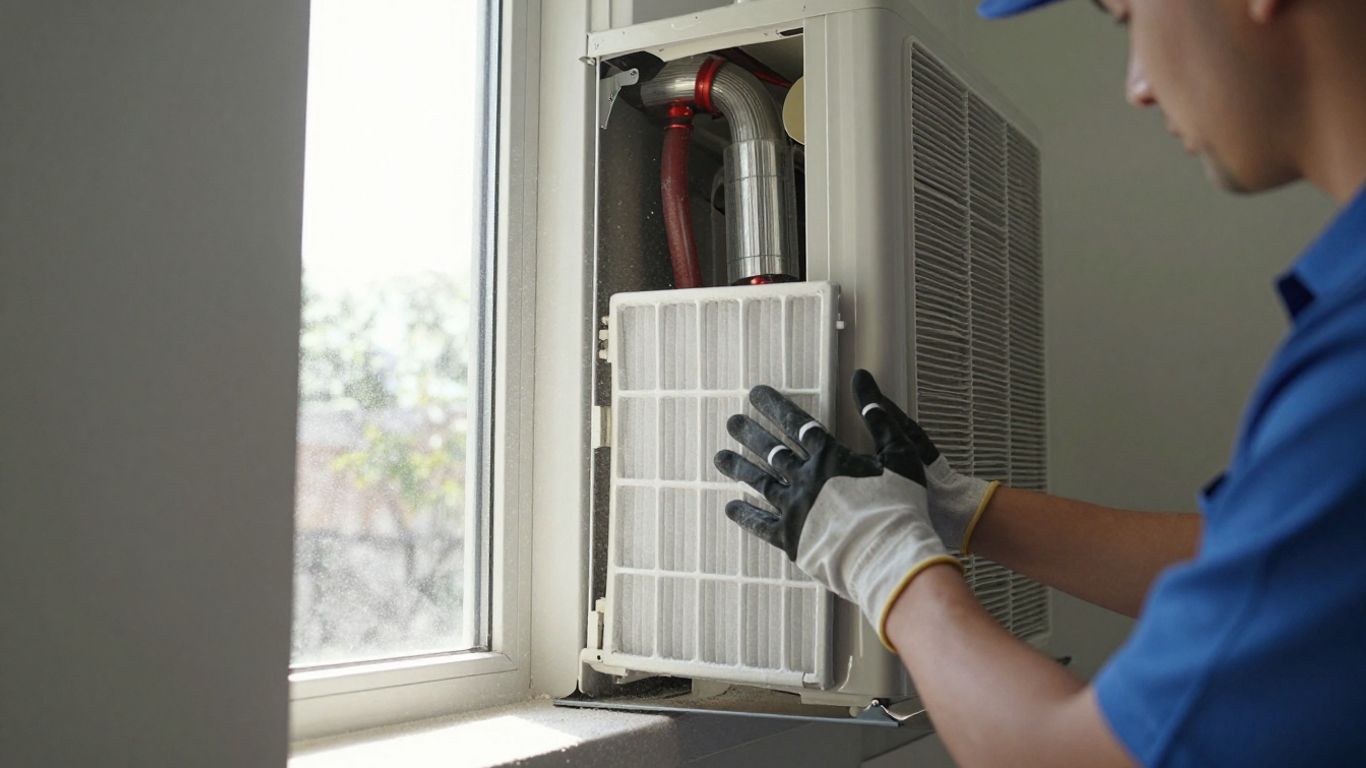
We often forget about our heating and cooling systems until something goes wrong. But just like our cars need regular oil changes, our HVAC units need consistent care to run well. Keeping your equipment in good shape is one of the most straightforward ways to save energy and money. It also helps prevent those inconvenient breakdowns when the weather is at its worst.
Regularly Change Air Filters
This is probably the easiest maintenance task we can do ourselves. A dirty air filter restricts airflow. Think of it like trying to breathe through a clogged nose – it’s hard work! When your system has to work harder because of a dirty filter, it uses more energy. Plus, it can lead to parts overheating and failing prematurely.
- How often? Generally, check your filter every 1-3 months. If you have pets, allergies, or live in a dusty area, you might need to check and change it more often.
- What kind? Look for the MERV rating on your old filter. Higher MERV ratings filter more particles but can also restrict airflow more. Your system’s manual should recommend a suitable range.
- Why it matters: Better airflow means your system doesn’t have to strain, leading to lower energy bills and a longer lifespan for your equipment.
Schedule Professional HVAC Tune-Ups
While changing filters is a DIY job, a professional tune-up is something we should schedule at least once a year, ideally before the peak heating and cooling seasons. A technician will check all the components, clean them, and make sure everything is working as it should. They can spot small issues before they become big, expensive problems.
During a tune-up, they typically perform tasks like:
- Checking refrigerant levels (for air conditioners and heat pumps)
- Inspecting electrical connections and tightening them
- Lubricating moving parts
- Testing the thermostat’s accuracy
- Cleaning the evaporator and condenser coils
- Checking the blower motor and fan
A professional check-up isn’t just about fixing things; it’s about preventing problems. Think of it as a health check for your HVAC system. Catching a small refrigerant leak or a worn-out capacitor early can save you from a costly repair down the line and keep your system running efficiently.
Keep Outdoor Units Clear of Debris
If you have a central air conditioner or a heat pump, you have an outdoor unit. This unit needs space to breathe. Over time, leaves, grass clippings, dirt, and other yard debris can accumulate around and on the unit. This buildup blocks airflow, making the unit work harder and less efficiently.
- Clearance: Aim to keep at least two feet of clear space around the outdoor unit.
- Cleaning: Gently remove any debris you see. You can use a soft brush or a hose (on a low setting) to clean the fins. Be careful not to bend the delicate fins.
- Trimming: Trim back any bushes or branches that are growing too close to the unit.
Taking these simple steps helps your HVAC system operate at its best, saving energy and keeping your home comfortable without unnecessary strain on the equipment.
Upgrade to Energy Efficient HVAC Systems
When our heating and cooling systems start showing their age, it’s a good time to think about upgrading. Replacing an old, inefficient unit with a new, energy-efficient model can make a big difference in our energy bills and our home’s comfort. It’s not just about getting a new box; it’s about choosing a system that works smarter, not harder.
Understand SEER and HSPF Ratings
When we look at new air conditioners, we’ll see something called SEER, which stands for Seasonal Energy Efficiency Ratio. For air conditioners, a higher SEER rating means it uses less energy to cool our homes. Think of it like miles per gallon for a car. The minimum SEER rating is currently 13 or 14, depending on the region, but many new units go up to 20 or even higher. For heat pumps, which both heat and cool, we’ll look at HSPF, or Heating Seasonal Performance Factor. Just like SEER, a higher HSPF means better heating efficiency. The minimum HSPF is usually around 8.2, but top-tier models can reach 12 or more. It’s worth paying attention to these numbers because a small jump in efficiency can add up over time.
Consider High-Efficiency Furnaces and Air Conditioners
Beyond just the SEER and HSPF ratings, the type of furnace or air conditioner we choose matters. High-efficiency furnaces, for example, use a secondary heat exchanger to capture more heat from the combustion process. This means they can achieve AFUE (Annual Fuel Utilization Efficiency) ratings of 90% or more, sometimes even reaching 98%. Older furnaces might only be 60-80% efficient, meaning a good chunk of the heat produced goes right up the chimney. Similarly, modern air conditioners are built with better components and designs that allow them to cool more effectively with less electricity. We should look for ENERGY STAR certified models, as these meet strict energy performance standards set by the EPA.
Explore Heat Pump Technology
Heat pumps are a really interesting option because they can provide both heating and cooling from a single system. Instead of generating heat like a furnace, a heat pump moves heat from one place to another. In the summer, it moves heat from inside our home to the outside. In the winter, it reverses the process and pulls heat from the outside air (even when it’s cold!) and brings it inside. Modern cold-climate heat pumps are much better than older models and can work effectively even in very low temperatures. They are often more energy-efficient than traditional furnaces and air conditioners, especially in moderate climates. We might even consider a dual-fuel system, which combines a heat pump with a gas furnace for backup on the coldest days, giving us the best of both worlds.
Smart Thermostat Strategies for Savings
We often overlook the simple controls we have over our home’s climate, but a smart thermostat can really make a difference in our energy bills. It’s not just about setting a temperature; it’s about intelligent temperature management. Think of it as giving your heating and cooling system a brain, one that learns your habits and adjusts accordingly.
Program Your Thermostat Effectively
Setting a schedule is the first step. We don’t need to heat or cool our homes to the same degree when we’re asleep or away. A basic programmable thermostat allows us to set different temperatures for different times of the day. For instance, we can lower the temperature a few degrees when we go to bed and raise it again before we wake up. Similarly, when we’re out for the workday, we can set it back even further. This simple act of not conditioning an empty or sleeping house can lead to noticeable savings.
Here’s a sample schedule we might consider:
- Wake-up: Set to a comfortable temperature 30 minutes before you typically get out of bed.
- Daytime (Away): Lower the temperature by 7-10°F (or raise it in summer) for at least 8 hours.
- Evening (Home): Return to a comfortable temperature about 30 minutes before you usually arrive home or settle in for the evening.
- Sleep: Lower the temperature by a few degrees for comfortable sleeping.
Utilize Smart Thermostat Features
Smart thermostats go beyond basic programming. They often have features that adapt to your lifestyle. Many can sense when you’re home or away using geofencing technology, automatically adjusting the temperature without you needing to lift a finger. Some even monitor local weather patterns and adjust your home’s heating or cooling proactively. This means your system works smarter, not harder, to maintain comfort while minimizing energy use. We should also look for features that provide energy usage reports, giving us a clear picture of where our energy is going and how our settings are impacting it.
Remote Access and Learning Capabilities
One of the best parts of a smart thermostat is the ability to control it from anywhere using a smartphone app. Did we forget to adjust the temperature before leaving for vacation? No problem, we can do it from our phone. Did the weather unexpectedly change, and we want to warm up the house before we get home? We can do that too. Many smart thermostats also have learning capabilities. Over time, they observe our manual adjustments and begin to anticipate our needs, creating optimized schedules automatically. This adaptive learning is where the real energy savings can happen, as it fine-tunes settings based on our actual behavior.
Improve Airflow and Ductwork Efficiency
We often focus on the furnace or air conditioner itself, but the system that moves the air is just as important. Leaky or poorly designed ductwork can waste a lot of energy. Think of it like trying to fill a bucket with holes in it – you’re just losing water (or in this case, heated or cooled air) before it even gets where it needs to go.
Seal Leaky Air Ducts
Air ducts, especially those running through unconditioned spaces like attics, basements, or crawl spaces, are notorious for developing leaks. Over time, the connections can loosen, or the material itself can get damaged. These leaks mean that the air your HVAC system works so hard to heat or cool is escaping into these empty areas instead of reaching your living spaces. We can seal these leaks using mastic sealant or metal-backed tape specifically designed for ductwork. It’s a bit of a messy job, but the payoff in reduced energy bills is significant. Checking and sealing your ducts is one of the most effective ways to improve your system’s efficiency.
Insulate Ductwork in Unconditioned Spaces
Even if your ducts are sealed, if they run through cold attics or hot crawl spaces, they’re still losing energy. The temperature difference between the air inside the duct and the surrounding space causes heat transfer. Insulating the ducts acts like a blanket, keeping the conditioned air at the desired temperature as it travels. We can use pre-formed insulation sleeves or wrap the ducts with fiberglass insulation. This step is particularly important in climates with extreme temperature variations.
Ensure Proper Vent Placement and Clearance
It’s not just about the ducts themselves; where the vents are located and what’s around them matters too. Furniture, rugs, or even curtains can block supply and return air vents, disrupting the airflow. When airflow is restricted, your HVAC system has to work harder to circulate air, using more energy. We should make sure that all vents are clear and unobstructed. Also, consider the placement of vents when arranging furniture. Sometimes, a simple rearrangement can make a big difference in how effectively your home is heated or cooled.
The path air takes from your furnace or AC to your rooms, and back again, is a complex network. Any breaks or blockages in this path mean your system isn’t performing as well as it could. Addressing ductwork issues is a direct way to make sure you’re not paying to heat or cool empty spaces.
Leverage Natural Heating and Cooling Methods
We can often use nature’s own cycles to help heat and cool our homes, reducing our reliance on energy-guzzling systems. It’s about working with the environment, not against it. Think of it as giving your HVAC system a well-deserved break whenever possible.
Utilize Sunlight for Passive Solar Heating
During colder months, the sun is a fantastic, free heat source. We can let its rays warm our homes naturally. The key is to open up curtains and blinds on south-facing windows during the day. This allows sunlight to stream in and heat up surfaces like floors and walls. These surfaces then slowly release that warmth back into the room after the sun goes down. It’s a simple way to add some free heat.
Employ Strategic Window Coverings
Window coverings do more than just block light; they’re also important for temperature control. In the summer, we want to keep that heat out. Closing blinds and curtains, especially on east and west-facing windows during the hottest parts of the day, can make a big difference. Thick curtains or thermal blinds work best. They act like an extra layer of insulation, stopping the sun’s heat from getting inside. In winter, we reverse this: open them up during the day to let the sun in, and close them at night to keep the warmth from escaping.
Improve Ventilation with Natural Airflow
Sometimes, the best way to cool down is to just let the air move. We can create natural cross-ventilation by opening windows on opposite sides of the house. This allows cooler outside air to come in and push warmer air out. Doing this in the early morning or late evening, when the outside temperature drops, is most effective. It’s a good idea to have a plan for how you’ll open and close windows throughout the day to take advantage of temperature changes.
We often overlook the simple power of opening a window. It’s a direct connection to the outside environment that can significantly impact our home’s comfort without using any electricity. Planning this simple action can lead to noticeable savings.
Here are some tips for maximizing natural ventilation:
- Open windows on lower floors and upper floors simultaneously to create a chimney effect, drawing cool air in and pushing warm air up and out.
- Use ceiling fans to help circulate the air that comes in, making the cooling effect more pronounced.
- Consider installing whole-house fans or window fans strategically to assist in pulling cooler air through the house and expelling warmer air.
- Be mindful of humidity levels; natural ventilation is most effective when the outside air isn’t too humid.
Wrapping Up: Making Your Home More Comfortable and Cheaper to Run
So, we’ve gone over a few ways to make your heating and cooling systems work better. It might seem like a lot at first, but even small changes can add up. Think about sealing up those drafts or maybe looking into a programmable thermostat. We’re not saying you have to do everything at once. Just picking one or two things to focus on can make a real difference in how comfortable your house feels and how much you spend on energy bills each month. It’s about making smart choices for your home and your wallet. We hope this gives you a good starting point for improving your home’s energy use.
Frequently Asked Questions
How often should we change our air filters?
We recommend checking your air filters every month. If they look dirty, it’s time to swap them out. For most homes, changing them every 1 to 3 months is a good rule of thumb, but this can change based on pets, allergies, or how much you use your system.
What’s the difference between SEER and HSPF?
SEER stands for Seasonal Energy Efficiency Ratio, and it measures how well your air conditioner cools. HSPF, or Heating Seasonal Performance Factor, does the same job but for your heat pump’s heating ability. Higher numbers mean the system works better and uses less energy.
Can we really save money with a smart thermostat?
Absolutely! Smart thermostats let us set schedules so the heating or cooling isn’t running when we don’t need it, like when we’re asleep or away. Many can even learn our habits and adjust automatically, leading to noticeable savings on our energy bills.
Is sealing air leaks a big job?
It can be as simple as using caulk or weather stripping around windows and doors, which is pretty easy. We might also find leaks in the attic or basement that need a bit more attention. Even small leaks add up, so tackling them is worthwhile.
Why is keeping the outdoor AC unit clean important?
The outdoor unit needs to breathe! If it’s covered in leaves, grass clippings, or other junk, it can’t release heat properly. This makes the system work harder and use more energy, and it can even shorten its lifespan. We should make sure it’s clear of obstructions.
What are some simple ways to use nature to help heat or cool our homes?
We can open curtains on sunny winter days to let the sun warm our rooms naturally. In the summer, closing blinds and curtains during the hottest parts of the day helps keep the heat out. We can also use fans to move air around when it’s cooler outside.
