


As the weather warms up, we often find ourselves reaching for the air conditioner to keep our bedrooms cool. But sometimes, that hum can be a real sleep disruptor. We’ve put together some simple quiet air conditioner tips to help you get a good night’s rest without the constant noise. Our goal is to make your spring nights comfortable and peaceful, even when the temperature climbs.
Key Takeaways
- When picking out a new air conditioner, pay attention to its decibel rating. Lower numbers mean less noise.
- Think about where you place the unit. Putting it away from your bed or using a window mount can make a big difference.
- Keeping your air conditioner clean and well-maintained helps it run more quietly and efficiently.
Choosing A Quiet Air Conditioner For Peaceful Sleep
When the warmer spring nights start to roll in, the last thing we want is a noisy air conditioner disrupting our sleep. Finding a unit that keeps things cool without sounding like a jet engine taking off is key. We need to think about how loud these machines actually are and what makes them tick.
Understanding Air Conditioner Noise Levels
Air conditioners are measured by their sound output, usually in decibels (dB). It’s helpful to know what these numbers mean in real-world terms. A whisper is about 30 dB, a normal conversation is around 60 dB, and a vacuum cleaner can be 70 dB or more. For a bedroom, we’re generally looking for units that operate below 50 dB, and ideally closer to 40 dB or even less. The lower the decibel rating, the quieter the air conditioner will be.
Here’s a general idea of what different dB levels sound like:
- 0-30 dB: Very quiet, like a library or a soft breeze.
- 30-50 dB: Noticeable but not intrusive, similar to a quiet refrigerator or a quiet office.
- 50-70 dB: Can be disruptive, like a normal conversation or a washing machine.
- 70+ dB: Loud and likely to disturb sleep, comparable to a lawnmower or heavy traffic.
When we look at specifications, we should pay attention to the noise level ratings, often listed as ‘sound power level’ or ‘sound pressure level’. Sometimes, manufacturers will give a range, so it’s good to check the lowest figure they provide.
Features That Contribute To Quiet Operation
Several design elements can make an air conditioner quieter. We should look for units that have features specifically aimed at reducing noise. For instance, some models use special fan blades designed to move air more smoothly and quietly. Others might have improved insulation within the casing to absorb sound. Variable speed compressors are also a big plus; they can adjust their speed based on cooling needs, running at lower, quieter speeds when full power isn’t required. We also want to check if the unit has a ‘quiet mode’ or ‘sleep mode’ setting, which often automatically adjusts fan speed and compressor operation for minimal noise.
When we’re shopping, it’s not just about the cooling power. We need to consider the overall user experience, and for many of us, that includes how much noise the unit makes while it’s doing its job. A quiet machine means better rest.
Some specific features to keep an eye out for include:
- Enclosed fan motors: These help contain the sound produced by the motor.
- Duct design: Smoother, more aerodynamic ductwork can reduce air turbulence and noise.
- Vibration dampening: Rubber feet or internal mounts can absorb vibrations that might otherwise turn into noise.
- Larger fan diameters: Sometimes, larger fans spinning at slower speeds can be quieter than smaller fans spinning faster.
Implementing Quiet Air Conditioner Tips For Optimal Comfort
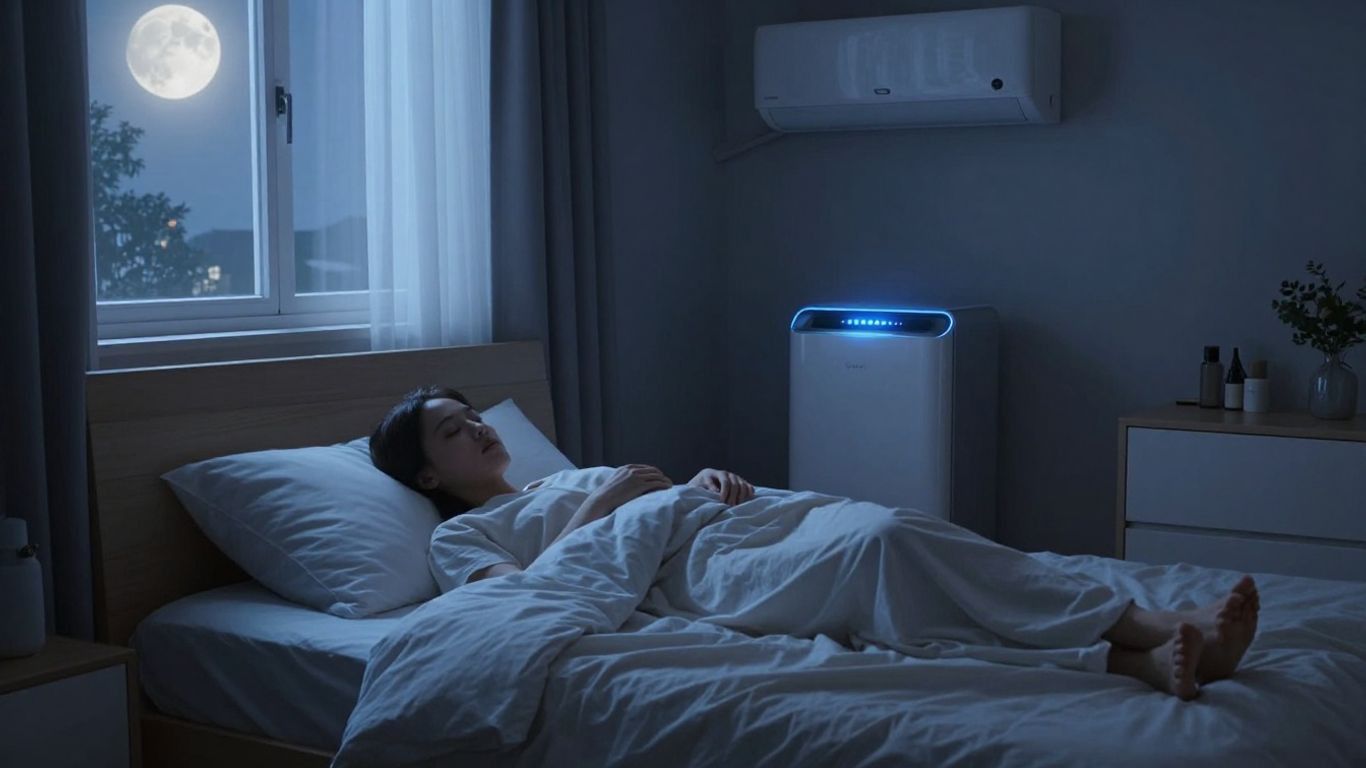
Once we’ve picked out a quiet air conditioner, there are still a few things we can do to make sure it runs as silently as possible. It’s not just about the unit itself; where we put it and how we care for it play big roles. We want our bedrooms to be sanctuaries of rest, and a noisy AC can really get in the way of that.
Strategic Placement Of Your Air Conditioner
Where we position the air conditioner matters more than we might think. For window units, try to ensure a snug fit. Any gaps can let in outside noise or cause vibrations that amplify the sound. If you have a portable AC, keep the exhaust hose as short and straight as possible. A long, winding hose can create back pressure and make the unit work harder, which often means more noise. We also found that placing the unit on a solid, level surface helps reduce rattling. Sometimes, just putting a small, dense mat underneath can make a difference.
- Consider the room’s acoustics. Hard surfaces reflect sound, making noise seem louder. Soft furnishings like rugs and curtains can help absorb some of the sound.
- Avoid placing the unit directly next to your bed if possible. Even a quiet AC can produce some ambient noise, and being further away can make it less noticeable.
- If you have a central AC system, check the vents. Make sure they aren’t blocked by furniture, which can cause air to rush through noisily.
Regular Maintenance For Quieter Performance
Just like any appliance, air conditioners need a little TLC to keep them running smoothly and quietly. Neglecting maintenance can lead to increased noise levels over time. We’ve learned that a little effort goes a long way.
- Clean or replace the air filter regularly. A clogged filter restricts airflow, making the fan work harder and louder. We aim to check ours at least once a month during the warmer seasons.
- Inspect the fan blades for dust buildup. Cleaning them can help maintain balance and reduce vibration.
- Check for loose parts. Sometimes, screws or panels can become loose over time, causing rattling. A quick tightening can often solve this.
Keeping your AC clean and well-maintained isn’t just about efficiency; it’s a direct path to a quieter sleeping environment. Think of it like tuning up a car – a little regular attention prevents bigger, noisier problems down the road.
We also found that sometimes, the vibration itself is the main culprit for noise. If you notice a persistent hum or rattle, check if the unit is sitting level. Sometimes, just a slight adjustment can make it much quieter. For window units, ensure they are properly secured in the window frame. A wobbly unit is a noisy unit. noisy unit that’s going to make noise.
Wrapping Up Our Quiet AC Tips
So, as the nights get a little warmer, we hope these simple ideas help you get better sleep. We’ve looked at ways to make your air conditioner run quieter, from simple checks to maybe a few bigger adjustments. It’s not about making huge changes, just small steps to make those spring evenings more comfortable. We want everyone to be able to rest easy without the constant hum of the AC being a bother. Give these tips a try and see if they make a difference for you. Sweet dreams!
Frequently Asked Questions
How can we tell if an air conditioner is going to be quiet before we buy it?
When looking for a quiet air conditioner, we should pay attention to its decibel (dB) rating. Lower numbers mean less noise. Many units will list this on their packaging or in the product details online. We also want to look for features specifically designed for quietness, like special fan blades or insulated cabinets, which help muffle the sound.
What’s the best way to place our air conditioner so it makes less noise?
Where we put the air conditioner can make a big difference in how much noise we hear. Placing it on a stable surface, perhaps with a rubber mat underneath, can stop vibrations that cause extra sound. If it’s a window unit, we should make sure it’s fitted snugly to prevent rattling. Sometimes, keeping it away from walls or furniture that could bounce sound back into the room helps too.
How often should we clean our air conditioner to keep it running quietly?
We recommend cleaning the air filter at least once a month, especially during the warmer seasons when we use it more. A dirty filter makes the unit work harder, which can increase noise. We should also check the outdoor unit for any debris that might be blocking airflow. Keeping the vents clear and the unit clean helps it run smoothly and quietly, ensuring our sleep stays undisturbed.
